A World Made Up of the Tissue of Dreams: An Interview with Michael Joseph Walsh
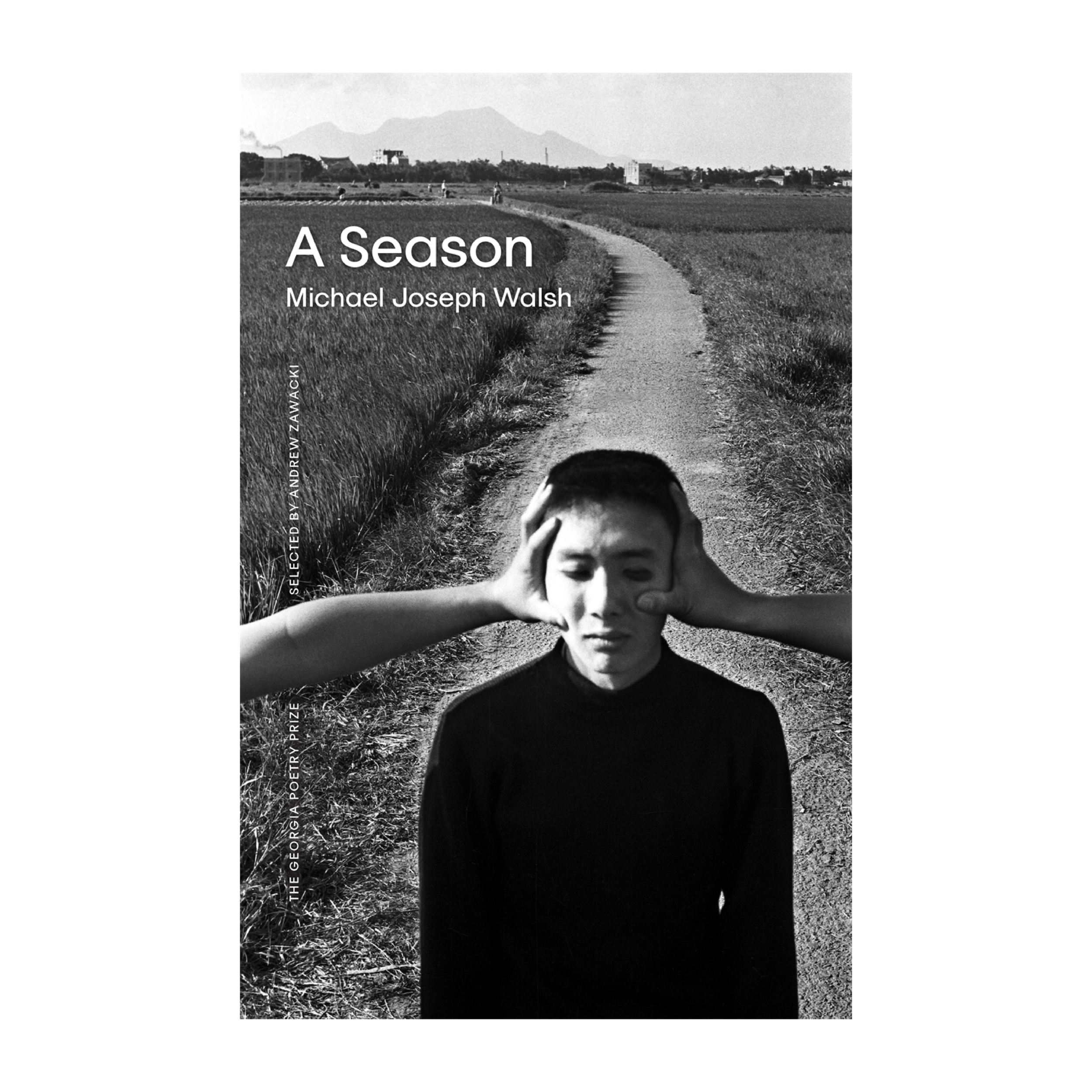
Michael Joseph Walsh, A Season. University of Georgia Press, 2026. 96 Pages.
Michael Joseph Walsh’s second book of poetry, A Season (University of Georgia, 2026), was selected by Andrew Zawacki for the Georgia Poetry Prize. It furthers the resplendent inquiry and spellbinding attention to syntax and its ruptures, its rushes and its lulls, of his debut collection, Innocence (CSU Poetry Center, 2022). We emailed about the book’s composition——how its voices gathered and raveled, amorphous impulses sparking strangeness and smear——and about the multivalent force of the “foreigner” in the book, as well as about his work as the editor of APARTMENT Poetry Quarterly.
Zach Savich: You note that “Toccata and Fugue for the Foreigner”——the first of two long serial poems that make up the book——is made largely of “fragments from a personal diary” and quotations from others. How did you come to this approach?
Michael Joseph Walsh: It’s interesting how difficult this is for me to recall! But that’s likely just a function of how much time has passed——ten years since I started the book, eight years since I finished it. Regardless, I’m pretty sure the initial impetus came out of the reading I was doing for my PhD comprehensive exams, though only a few of the texts I ended up using were actually included in any of my reading lists.
Straightforwardly, I was doing a lot of reading to prepare for the exams, underlining and then typing up “useful” quotations as I encountered them. That was my exam prep strategy, such as it was——to grab lots of quotations and write little notes about them, in hopes that the quotations and the notes would prove useful once I got the exam questions. And in doing that I ended up encountering this constellation of texts that seemed to be participating in a particular conversation——about, crudely, how to navigate the experience of the collapse of the usual distinctions between self and world, language and reality, mind and body, etc.——which I then felt compelled to arrange for display. So that, as best as I can remember, is how the non-italicized, expository voice of “Toccata and Fugue for the Foreigner” came about.
The italicized, narrative voice has a slightly different but roughly contemporaneous origin. For that voice the instigating text was a collection of translated short stories by the Korean writer Yi Sang. I similarly marked this up and copied out a lot of quotations——not in this case because they seemed “useful” (Yi Sang was not on my exam lists) but because they seemed to rhyme with certain psychological phenomena I was dealing with at the time. I guess I recognized myself in the voice of some of the stories, or at least the version of myself that I was experiencing at that moment. I’d also started keeping a personal diary, which I ended up writing in regularly for about two years (2016–2018). Ultimately the idea ended up being to try to merge my own life (as contained in the diary) with Yi Sang’s (as refracted through his fiction). I created a giant document with selections from my diary and mixed that with selections from Yi Sang, randomized the list, and built the first few poems from that. As I continued to work on the series, I never drew any further from Yi Sang, but I kept adding to the diary. So, if you were to track it, you’d find that the density of fragments from Yi Sang is much higher at the beginning of that series than it is by the end of it; the diary material swallows it up. But other voices end up participating as well, since I also sometimes used the diary as a commonplace book. So there are a few fragments in there that ultimately come from what I was reading at the time: Laura Riding, Ashbery, Thoreau, etc.
I originally thought of both of these——the source text collage and the Yi Sang/diary hybrid——as stand-alone series. I can’t remember when or how I got the idea to merge the two; probably I was influenced by the poem/commentary format of Spicer’s Homage to Creeley. But once I tried it seemed perfectly natural, even inevitable. Both ultimately came out of similar impulses, after all. And a toccata does like to be paired with its fugue.
ZS: In the book’s notes, a reader learns that the poems in its second series, “A Season,” also “occasionally adapt language” from the same sources as “Toccata and Fugue for the Foreigner.” This agitates or opens up authorship in other ways, from cento or collage to a further blending. But you don’t include, like, footnotes that doggedly tell us what came from where, or what’s “really” “you.” How were you thinking about voice, of the expressive self, the “really” “you,” when writing these poems?
MJW: The poems in “A Season” were mainly composed using a variation on the procedure used for “Toccata and Fugue for the Foreigner.” The source documents for “Toccata and Fugue” were randomized by line——the lines/sentences themselves were intact, but I shuffled the order using an online list randomizer so that I could make new connections, splice together language from unrelated texts, etc. For “A Season” I took this a step further and used a string randomizer to randomize the words in the lines themselves. So what I ended up with was several giant documents of carefully curated gibberish (a gibberish diary document, a gibberish “Toccata and Fugue” source text document, etc.). And I’d stare at this gibberish until particular word combinations suggested themselves to me, and I’d compose from there.
So that’s how most of “A Season” was written. And, to clarify, I didn’t really think of composing from gibberish in this way as adapting language from the sources out of which the gibberish was generated. It was more like writing from a word bank than creating a cento. But occasionally I’d get stuck, or I’d want to introduce a new texture into a given poem, in which case I’d dip back into the “intact” source documents I used for “Toccata and Fugue” and stare at those until something suggested itself to me. So occasionally in “A Season” there will be a fragment, or a variant on a fragment, of Thoreau or Dōgen that might have appeared in the non-italicized sections of “Toccata and Fugue for the Foreigner,” or an “intact” fragment from my diaries that might have appeared in the italicized narrative sections.
Broadly, you could say that composing in this way——in a manner that “agitates and opens up authorship”——follows naturally from the book’s thematic concerns. One way of describing the experience the book is wrestling with is the sense of lacking, for a time, a stable sense of an Inside sealed off from the Outside, an experience Mallarmé once described as one in which he’d felt he’d become “a diamond, which reflects everything, but has no existence in itself.” So in that sense it felt natural to build the poems out of a mutilated external corpus, rather than trying to recollect emotion in tranquility, or whatever (for which one needs both access to tranquility and a stable container for one’s emotions).
I was, and still am, basically committed to a vision of poetic composition as coming from an “Outside,” though for me this is less a metaphysical position and more an enabling myth (one that has, of course, a long history——as long as the art itself). But to conceive of the poem as coming from an Outside, or to write poetry using an exteriorizing process like the one I describe above, does nothing to prevent the poem from ultimately “resembling you,” as Tristan Tzara would put it. I find that every poem I write, no matter how I write it, sounds like me and reflects, like the mirror it is, my peculiar foundational obsessions.
Of course who “I” am——what the self is——is, in its own way, a great mystery. But, with that caveat in mind, I do think the poems are “really” “me,” as much as they would have been if I’d written them from the Inside out, rather than from the Outside in.
ZS: You’re the editor of APARTMENT Poetry Quarterly. I’ve long admired each issue’s curation. In what ways did composing A Season feel editorial or curatorial? Conversely, how does your editorial work feel generative, collaborative, creative–perhaps in ways that go beyond typical ideas about editing?
MJW: First, thanks for the kind words about APARTMENT. It’s really only become apparent to me recently how many people follow it and how important it’s been for some. So that’s been a very heartening and gratifying discovery.
On the one hand, you could say that the composition of “Toccata and Fugue for the Foreigner” was curatorial all the way down, in the sense that the process was entirely one of selection and arrangement. But on the other, that really isn’t very different from any other poetry collection——obviously one “curates” one’s own work when putting a book together, no matter how the poems were composed. So the difference, such as it is, is a matter of degree, not kind.
On the level of selection, there’s the fact that I selected the source texts for each of the poem’s two voices. And then there was the process of selecting the passages from those texts that would serve as candidate texts to be spliced into the centos, and then the process of making specific compositional choices and actually stitching the poems together. This latter step, for what it’s worth, didn’t feel meaningfully different from “normal” composition; when we write we’re always considering candidate possibilities and choosing amongst them. So in a sense the process I came up with for “Toccata and Fugue for the Foreigner” was just a way of externalizing a normally internal process.
As far as the ordering of the sequence goes, and the specific pairings of texts: both “Toccata and Fugue for the Foreigner” and “A Season” were written under the influence of Spicer and his conception of the serial poem (with “Toccata and Fugue,” as noted above, being specifically indebted to Spicer’s Homage to Creeley). At the time I had the idea that in a serial poem the components should ideally appear according to their order of composition. So it would have seemed antithetical on some level to the spirit of the thing to make major changes to the order of the poems after the fact. As a result, I’m not sure to what degree I ended up making any explicit decisions about the order of the poems. I must have swapped a few sections here and there, but at this point I don’t remember any of those individual decisions. What I do know is that both sequences proceed largely chronologically by date of composition. So I suppose you could say that I actually took a kind of anti-curatorial approach to the arrangement of the overall sequence. But of course choosing to present things “as is,” with relatively little curatorial fussing, is a curatorial decision in itself.
To bring things back to the editing of a journal: As any other journal editor will attest, putting together an issue isn’t unlike putting together a little (or big) book, since a journal issue is essentially a mini-anthology. Though APARTMENT is by no means meant to be read in order from beginning to end, I do put a good amount of thought into sequencing——which poems go in Unit A, which will “follow” them in Unit B, etc. Again, I don’t expect that many people ever read an entire issue, much less straight through in order. So I suppose I take as much care as I do mainly for my own satisfaction. But I do find that thinking carefully about the order allows me to engage more deeply with the poems. It can open the poems up in an interesting way to think of them in relation to the other poems in the issue——to think about how shifting the context in which they appear will change how they’re perceived, and then to make judgments about how to present each of them in their best light. We do always perceive poems in the light (or shadow) of other poems. To return to Spicer: “Poems should echo and reecho against each other. They should create resonances. They cannot live alone any more than we can.”
ZS: The book’s second section is packed with resplendent phrases: “The affective / Correlate of the welcome smell of grass”; “the oddly bloodless purple of each / Available feeling.” They’re variously rapt, vast, philosophical, tense. There’s often a tinge of grandeur, at once wondrous and stricken, as in these lines:
As the hummingbird translated from open to open
Is falsely loved, feared and sought, is the rare thing itself
To find the fading line of its knowing
Who enters it and how
That semi-light coupling in space grows bigger
I’m curious about your relationship to the image in these poems. How do you think of it as motif, depiction, visionary archive, symbol? That might include symbols that don’t symbolize directly. I thought of Stevens, at times——would you redirect or add nuance to that association?
MJW: I don’t really think of the image——much less the symbol——as a compositional target when I’m writing. The target, such as it is, is much more amorphous than that——more of an impulse toward an atmosphere or a constellation of effects, the particulars of which I end up discovering in the process of composition. And as I write into that impulse the images emerge and take their places in service to it. All of which is to say, I guess, that my relationship to image isn’t fundamentally different from my relationship to meter, syntax, rhyme, rhetoric, etc. You just go on your nerve, as O’Hara says, and it all ends up in the soup. All I’m really asking myself in the moment of composition is “What’s next?”
I do think these particular poems have a tendency not to dwell on particular images, in the sense that they rarely allow an image to crystallize into something clear and paraphrasable. There’s this frequent impulse to smear the paint, as it were, and to aim for impossible but still graspable images——”images” that are flickeringly available to the mind’s eye, if not quite to the eye itself. And I think that’s probably in keeping with the book’s hypnagogic vision of a world made up of the tissue of dreams.
Stevens was very important to me as a young poet, and I think I must have taken his dicta from “Notes Toward a Supreme Fiction”——that a poem “must be abstract,” “must change,” and “must give pleasure”——to heart early on. As Stevens himself shows, to say that a poem must be “abstract” is not to say that it can’t be full of lushly rendered particulars. And I do think that in general I’m drawn to a kind of lush or sensuous abstraction, which many of the poets I admire most——Lisa Robertson in particular comes to mind, among living poets——have mastered.
ZS: Like in the work of Stevens or Robertson, the “lush or sensuous abstraction” can come against plainer statements. I think of lines like: “A musical thinking, a face / To help remember, a face.” That has the sense of grasping for the smear, thus making it graspable, or nearly. Aditi Machado likens the perspective in these poems to that of “a person born seemingly right into adulthood, drenched in experience and yet somehow innocent.” Acknowledging that Innocence is the title of your first book (CSU Poetry Center, 2022), do you think there’s a type of innocence in this approach to vision and abstraction? What might we gain from a poetics of innocence, however worldly and exhausted?
MJW: I love Aditi’s blurb. And I think her framing——the invocation of innocence and experience, and the idea that the speaker is, in some sense, newly born——is genuinely useful.
There’s an inherent innocence in being newly born, or new to any scene. And you could say there’s an innocence to the way the speakers seem to find themselves navigating a world that presents itself to them as a “blooming, buzzing, confusion,” as William James once described the experience of early infancy. The “newly born” speakers (I’ll refer to them in the plural for convenience) are reduced to taking things as they come and making new shapes with them. They find themselves in a situation in which “creative” action is mandatory; everything they encounter is new, now that the world has been made strange.
Another way of putting this is that the speakers, by virtue of whatever has led to them being “newly born,” have become——maybe against their will——highly negatively capable; that is, they have become, in their “innocence,” “capable of being in uncertainties, Mysteries, doubts, without any irritable reaching after fact and reason.” Keats seems to describe negative capability mainly as a faculty that one possesses to a greater or lesser degree, but I think it’s also a communicable state——I think particular experiences or particular encounters with works of art can leave us feeling “negatively capable” in their wake. Such encounters bring us back to the state of innocence in which we and the world have been made strange, and in which new creation is possible–even necessary.
We could also think of this state of negatively capable innocence as analogous to the dream state. In dreams we find ourselves maximally receptive to the strange and also, spookily, “automatically” creative (insofar as the dream world is a creation of our minds). So we might say that the speakers of these poems——all of them, really, but perhaps most clearly the narrator of the narrative sections of “Toccata and Fugue for the Foreigner”——are innocent insofar as they find themselves in a “world made up of the tissue of dreams.”
I’ve mentioned elsewhere, in a different interview, that another touchstone for “innocence” for me is Hexagram 25 of the I Ching, which is most often translated as “Innocence” but which has more to do with the concept of “the unexpected.” And I think this applies just as well to the state of “innocence” we might attribute to the speakers of “A Season.” Once one has been rendered innocent, and self and world have been made strange, one can expect only the unexpected, since the expected is the fruit of experience.
For me there is no poetry worth the name without strangeness or surprise. And insofar as experience is the enemy of both, we might say that innocence is the well from which all poetry is drawn.
ZS: “Smear” also brings us to the first piece in the book, which says: “The foreigner calls forth a new idea of happiness: smear of light at horizon’s commissure, a pantomime of stone lacking flesh.” The next piece questions that “new idea”: “Can one be a foreigner and happy?” We can see these tensions throughout the collection: the example of a foreigner who is “foreign” to self or language or places or world, perhaps more foreign when experience and understanding are most intricate. Readers might see the word with varying philosophical and political meanings. How do you currently see this figure of the “foreigner,” as a term in the book that is both anchoring and ambient, a presence that isn’t a character in a conventional sense?
MJW: Most, if not all, instances of the word “foreigner” in “Toccata and Fugue for the Foreigner” come from Kristeva’s Strangers to Ourselves. That book asks, essentially: whence xenophobia? Why do we fear the foreign, the foreigner? And from what I remember, her answer is essentially that the encounter with the foreigner reminds us of our own essential strangeness, our strangeness “to ourselves,” which is a fact that haunts us but that under normal circumstances we are able to repress.
As for how the “foreigner” functions in this book, I think it’s multivalent. For one thing, I find it helpful to remember that for Kristeva, in the original French text, the foreigner is always l’étranger——the original French title is Étrangers à nous mêmes——which could have been translated as “the stranger,” as is typically done with Camus’s L’Étranger. In that sense the foreigner can be read as an embodiment of strangeness or alterity, broadly construed. The foreigner is a person who has become self-estranged and, since self and world are co-constituted, whose world has become strange as a result. I’m reminded of the basically untranslateable Jabès epigraph that precedes “A Season,” the second part of the book: “L’étranger ? L’étrange-je.” (“The stranger/foreigner? The strange-I”). The foreigner is in some sense a singular figure, but he is also all of us. J’est un autre, and so are you.
I do think the question of how “the foreigner” functions as a “character” in the book is an interesting one. I think there’s a possible reading of the book in which the foreigner is all three speakers, or three aspects of the same speaker (a strange trinity). Without making too much of it, I will say that when I was writing the book I was also interested in a few chance correspondences that reinforced my sense of the multivalent character of the “foreigner” as an organizing figure, or character, or whatever. One was Yi Sang, whose sobriquet when read literally means “plum box” (이상 李箱) but also happens to be a homophone for the word “strange” (이상 異常). The other was my own surname, Walsh, which has a complicated etymological history but at one point, and in many different contexts, meant “foreigner.” In that sense the “foreigner” has many faces, and the book might be read, to quote from one of the narrative sections of “Toccata and Fugue for the Foreigner,” as “a house of mirrors in which every face is perpetually on its way.”
So you could argue that a central theme of the book is “strangeness,” an encounter with the strange. But strangeness and alterity are also central to poetry, to what we regard as “poetic.” Aristotle, as paraphrased by Viktor Shklovsky, puts it very simply: “poetic language must appear as strange and wonderful.” And of course Shklovsky himself famously argues that what distinguishes poetic language from ordinary language is its capacity to make things strange——to “make the stone stoney” and, in so doing, to return the stone to us. To borrow terms from the previous question, we might say that poetry returns us to a state of innocence before the stone, which experience had taught us to take for granted.
In that sense I think you can read foreignness/strangeness and innocence as intimately related concepts. If you happen to find yourself innocent before the world——as we so often do in our dreams——then the world that confronts you and the self that confronts that world will be some flavor of strange, or fantastic, or uncanny. And I think this is the condition that produces poetry and that poetry produces in us. Poetry visits us like King Hamlet’s ghost, and makes us strangers to ourselves in its wake:
Horatio: O day and night, but this is wondrous strange.
Hamlet: And therefore as a stranger give it welcome.
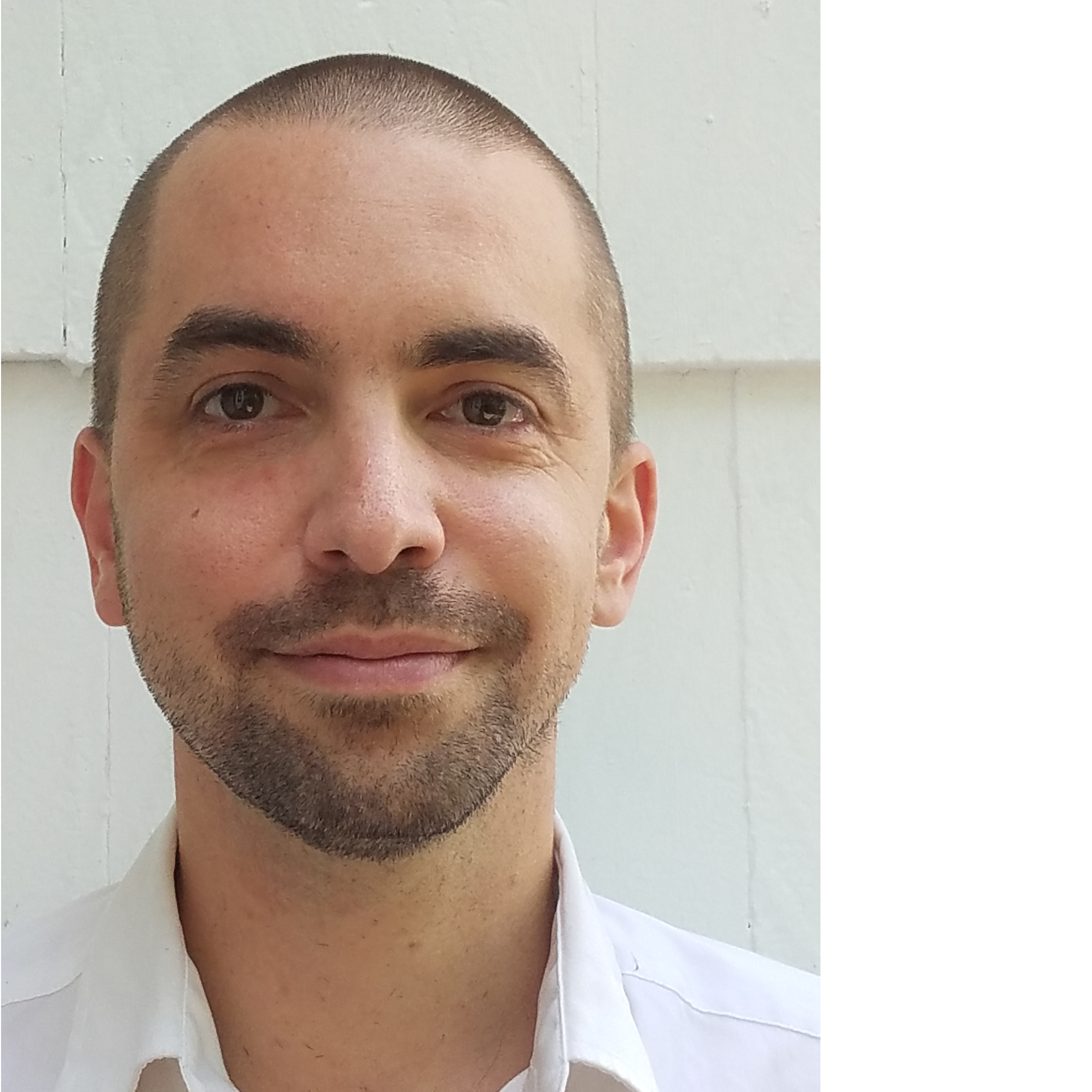
Michael Joseph Walsh is the author of A Season (University of Georgia Press, 2026), winner of the Georgia Poetry Prize, and Innocence (CSU Poetry Center, 2022), winner of the Lighthouse Poetry Series. He is the editor of APARTMENT Poetry, and his poems, reviews, and translations have appeared in the Brooklyn Rail, Denver Quarterly, DIAGRAM, Guernica, Fence, jubilat, and elsewhere. He lives in Philadelphia.